How Leaders Keep Goals on Track in Q1
The start of a new year brings renewed energy, ambitious plans, and clearly defined goals. However, for many organizations, Q1 is also when goals quietly begin to slip off track. Despite strong intentions, leaders often find that priorities shift, execution slows, and momentum fades sooner than expected.
The difference between organizations that succeed in Q1 and those that stall comes down to reinforcement, alignment, and accountability.
Why Goals Fail Early in Q1
One of the most common reasons goals fail early in Q1 is the assumption that once goals are set, they will naturally be achieved. Leaders kick off the year with strategy sessions, town halls, and detailed plans, but without consistent reinforcement and follow-through, even the best goals lose urgency.
Competing priorities, daily operational demands, and unclear ownership quickly take over. When goals are not revisited regularly, teams lose focus, and progress becomes reactive rather than intentional.
The Importance of Weekly Priority Alignment
High-performing leadership teams treat goal alignment as an ongoing discipline, not a one-time event. Weekly priority alignment ensures that leaders are focused on the few initiatives that truly move the organization forward. These check-ins create clarity around what matters most this week, not just this quarter.
When leadership teams consistently align on priorities, they model focus for the rest of the organization and prevent teams from drifting into low-impact work.
Identifying and Removing Obstacles Early
Another key reason Q1 goals stall is unaddressed obstacles. Bottlenecks, resource gaps, miscommunication, and competing expectations can quietly undermine progress.
Effective leaders proactively identify these barriers early and remove them before they become excuses or sources of frustration. By creating space for honest discussion about what is getting in the way, leaders empower teams to move faster and with greater confidence.
Accountability Drives Momentum and Results
Accountability is not about micromanagement; it’s about clarity and ownership. When leaders consistently ask about progress, commitments, and outcomes, they reinforce that goals matter.
Regular accountability conversations keep momentum high and signal that execution is just as important as strategy. Teams that know their progress will be reviewed are more likely to follow through, adjust quickly, and stay engaged.
Turning Small Actions into Long-Term Success
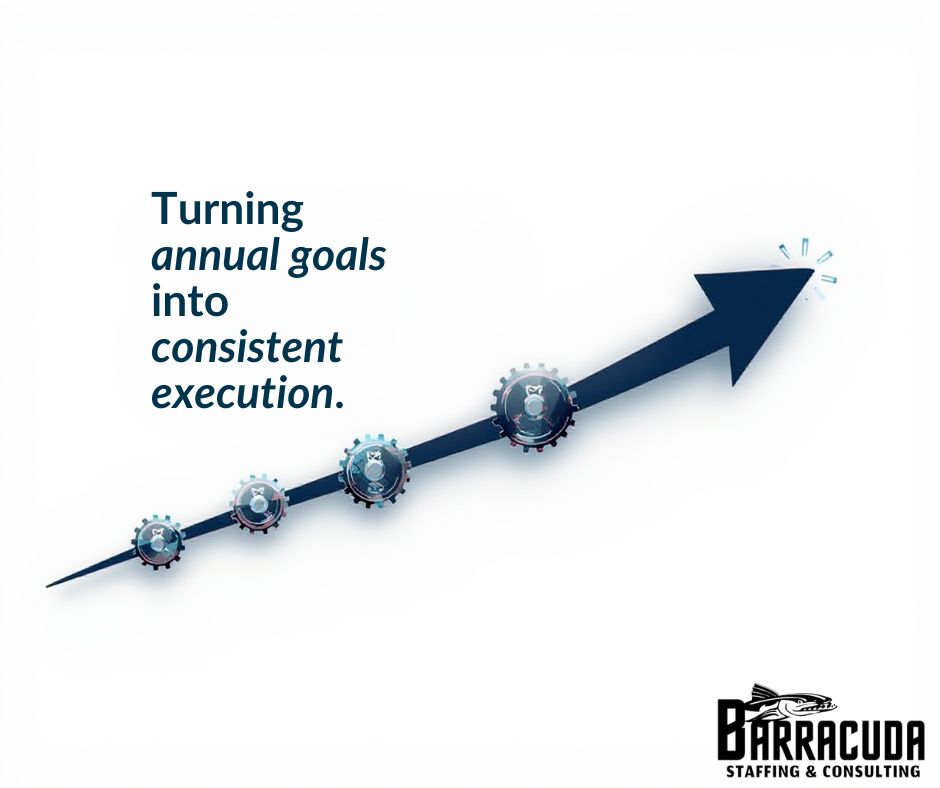
Sustainable success in Q1 doesn’t come from grand gestures; it comes from small, intentional leadership actions repeated consistently. Weekly alignment meetings, clear priorities, proactive problem-solving, and ongoing accountability may seem simple, but together they create powerful momentum.
Over time, these habits build trust, discipline, and results that extend far beyond the first quarter.
Key Takeaways
- Goals fail in Q1 when they lack reinforcement and consistent follow-through
- Weekly leadership alignment keeps priorities clear and focused
- Identifying and removing obstacles early prevents stalled progress
- Consistent accountability drives momentum, ownership, and results
- Small, intentional leadership actions lead to long-term success
If your organization struggles to maintain focus and execution beyond goal-setting, Barracuda Staffing and Consulting can help. We partner with leadership teams to strengthen alignment, accountability, and performance starting in Q1 and sustaining results all year long.
Contact Barracuda today to learn how intentional leadership practices can turn your goals into measurable outcomes.