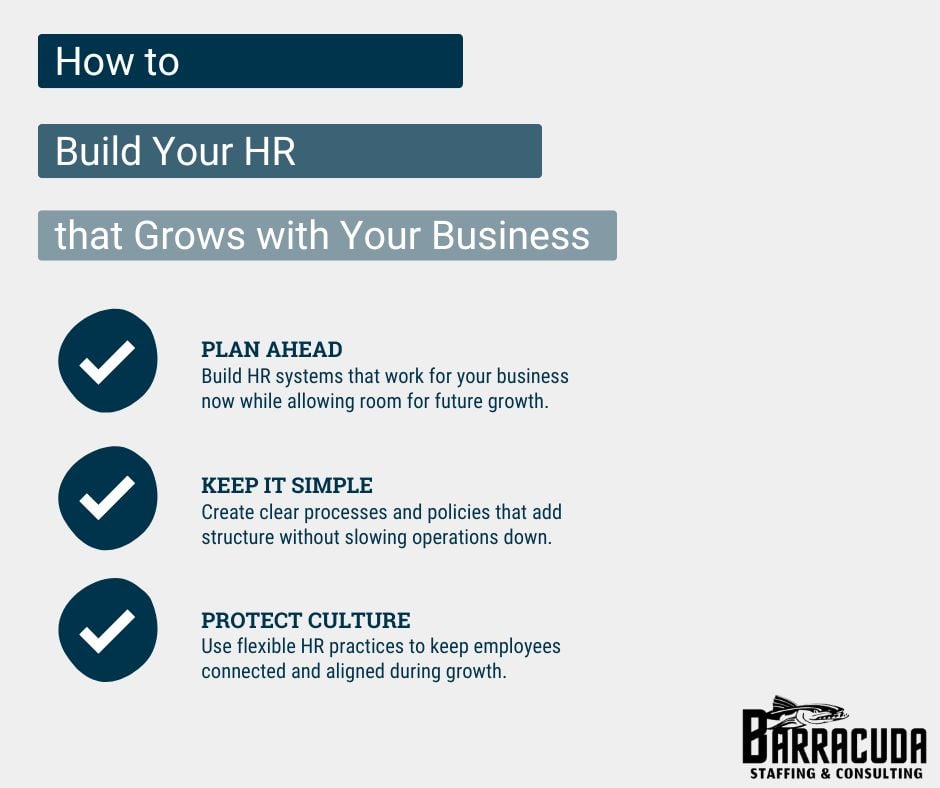
Built to Grow: Creating HR That Evolves With Your Business
Growth is exciting, but growth without the right HR foundation can quickly create chaos.
What works for a company with 10 employees rarely works the same way at 50, 100, or beyond. As businesses evolve, HR needs to evolve with them. Processes become more complex, communication becomes more critical, and culture becomes harder to maintain without intentional support.
The goal isn’t to build the biggest HR system possible. It’s to build one that grows at the right pace for your business.
Strong HR isn’t static, it scales.
Growth Changes Everything… Including HR
In the early stages of a business, HR often feels informal. Policies are flexible, communication happens naturally, and decisions move quickly.
But as teams grow, those same informal systems can create confusion, inconsistency, and risk.
More employees mean:
- More communication challenges
- More compliance responsibilities
- More management structure
- More need for consistency
If HR processes don’t evolve alongside growth, businesses often find themselves reacting to problems instead of preventing them.
Scalable HR helps organizations stay proactive instead of overwhelmed.
From Startup Shortcuts to Scalable Systems
As businesses expand, policies and processes need to mature with them.
That doesn’t mean creating layers of unnecessary bureaucracy. It means building systems that support employees clearly and consistently as the organization grows.
Scalable HR may include:
- Updated employee handbooks and policies
- Structured onboarding processes
- Clear performance expectations
- Consistent communication practices
- Leadership and manager support systems
The right systems reduce confusion, improve accountability, and create a better employee experience overall.
Good HR infrastructure should make growth easier, not more complicated.
Too much HR? Too Little HR? Both Can Hurt
One of the biggest mistakes growing companies make is overbuilding, or underbuilding, their HR systems.
Some organizations implement overly complicated processes too early, slowing down decision-making and frustrating employees. Others wait too long to create structure, leading to inconsistency, compliance risks, and operational confusion.
Effective HR finds the balance.
Your HR strategy should match your current stage of growth while remaining flexible enough to evolve as the business changes. The goal is not perfection, it’s alignment.
HR should support the business, not overwhelm it.
Protecting Culture While Everything Else Changes
Growth can put company culture under pressure.
As new employees join, teams expand, and leadership responsibilities shift, it becomes harder to maintain the communication, trust, and values that once came naturally.
Flexible HR helps protect culture during periods of changes by creating consistency without losing personality.
Clear expectations, transparent communication, and people-focused leadership practices help employees stay connected, even as the company evolves.
Culture doesn’t survive growth by accident. It survives through intentional support.
What Scalable HR Really Means
- HR systems should evolve alongside business growth
- Growing companies need scalable policies, processes, and employee support
- Overbuilt HR systems create unnecessary complexity, while underbuilt systems create risk
- Flexible HR strategies help protect company culture during periods of change
- Strong HR infrastructure creates stability, consistency, and long-term growth support
Build HR for the Company You’re Becoming
Your HR strategy shouldn’t just support where your business is today, it should support where it’s headed next.
At Barracuda Staffing & Consulting, we help businesses create flexible HR systems that scale with growth, strengthen culture, and support long-term success. Whether you’re growing rapidly or preparing for the next stage, we’ll help you build HR that works now and evolves later.
Let’s create an HR foundation designed for growth, not growing pains.