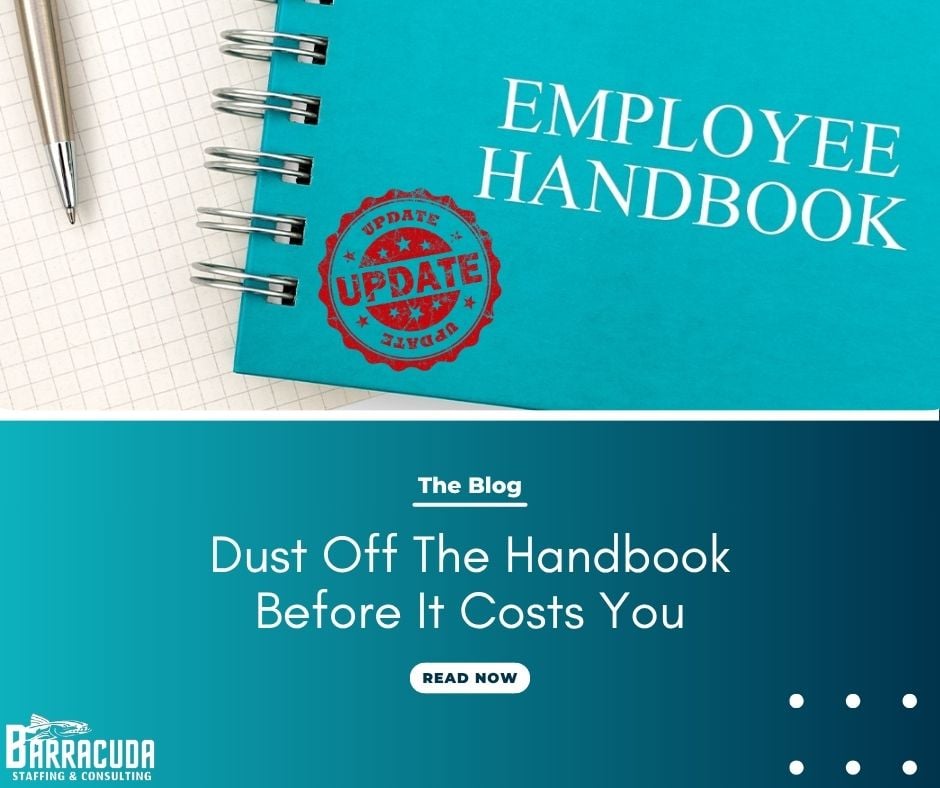
Yesterday’s Handbook, Today’s Headache
The Hidden Risk of Outdated Policies
An employee handbook shouldn’t be a document you create once, save to a folder, and forget about.
As your business grows, workplace expectations change. Teams expand, leadership evolves, employment laws are updated, and new ways of working emerge. If your handbook doesn’t keep pace, the policies designed to protect your organization can quickly become a source of confusion and potential risk.
A strong employee handbook should reflect how your company operates today. It should give employees clear answers, help managers make consistent decisions, and provide a reliable foundation for your HR practices.
If it has been a while since anyone opened yours, it may be time for a closer look.
The Copy-and-Paste Policy Problem
One of the most common handbook mistakes is relying on generic policies that don’t reflect how the business actually operates.
A handbook might describe one attendance process while managers follow another. PTO policies may have changed without being updated. Job classifications, remote work expectations, or reporting procedures may no longer align with reality.
Another common mistake? Adding new policies without reviewing how they interact with existing ones.
When written policies and everyday practices don’t align, employees receive mixed messages and managers are left making judgment calls. That inconsistency can create unnecessary confusion and risk.
The Compliance Gaps Hiding in Plain Sight
Employment requirements change, and businesses need HR practices that change with them.
Employers can overlook important areas, including leave, wage and hour practices, workplace accommodations, anti-harassment expectations, and other employment requirements.
A handbook alone can’t eliminate compliance risk, but outdated or inaccurate language can make matters more complicated.
Regular reviews allow businesses to identify gaps, update policies, and make sure written expectations align with current practices and applicable requirements.
Write It So People Will Actually Read It
A technically detailed policy isn’t very helpful if employees can’t understand what it means.
Effective handbooks use clear, practical language. Employees should be able to quickly understand what’s expected, where to go with questions, and what steps to follow when an issue arises.
Plain-language policies also help managers. Instead of interpreting complicated wording differently across departments, leaders have a clearer framework for making consistent decisions.
Your handbook should be a resource, not a puzzle.
One Company, Multiple States, Different Rules
Employing people across state lines adds another layer of complexity.
Requirements involving leave, final pay, workplace protections, and other employment matters can vary by location. A policy that works for employees in one state may not fully address requirements in another.
As companies expand geographically, handbook reviews should account for where employees actually work. That may mean creating state-specific policies or supplements while maintaining consistent company-wide expectations.
Growth shouldn’t leave compliance playing catch-up.
Give Your Handbook a Regular Checkup
Don’t wait for an employee issue to discover that your handbook is outdated.
Businesses should review their handbooks regularly and whenever significant changes occur, such as expanding into another state, introducing new benefits, changing workplace practices, or experiencing substantial growth.
A proactive review can identify problems before they become bigger ones.
Don’t Let Your Handbook Fall Behind
- Handbooks should reflect actual workplace practices, not outdated procedures.
- Compliance requirements and company policies can change over time.
- Clear language makes policies easier for employees and managers to follow.
- Multi-state employers need to consider location-specific requirements.
- Regular handbook reviews help identify gaps before they create problems.
Dust Off the Handbook Before It Costs You
Your employee handbook should be working for your business, not quietly creating risk in the background.
Barracuda Staffing & Consulting can help review, update, and develop employee handbooks that reflect your operations, support your culture, and address your evolving HR needs.
If your handbook hasn’t kept up with your business, it’s time to bring it up to speed. Reach out to Barracuda today to get started.